By Mr. Huynh – Published:2026-08-21T07:08:13.385Z
[Disclaimer: All content on bingcoin.org is strictly for educational and informational purposes only and should not be construed as financial, legal, or investment advice. Cryptocurrency trading involves high risk. Always Do Your Own Research (DYOR).]
Disclaimer: All content on bingcoin.org is for educational and informational purposes only and should not be construed as financial advice. Always Do Your Own Research (DYOR).
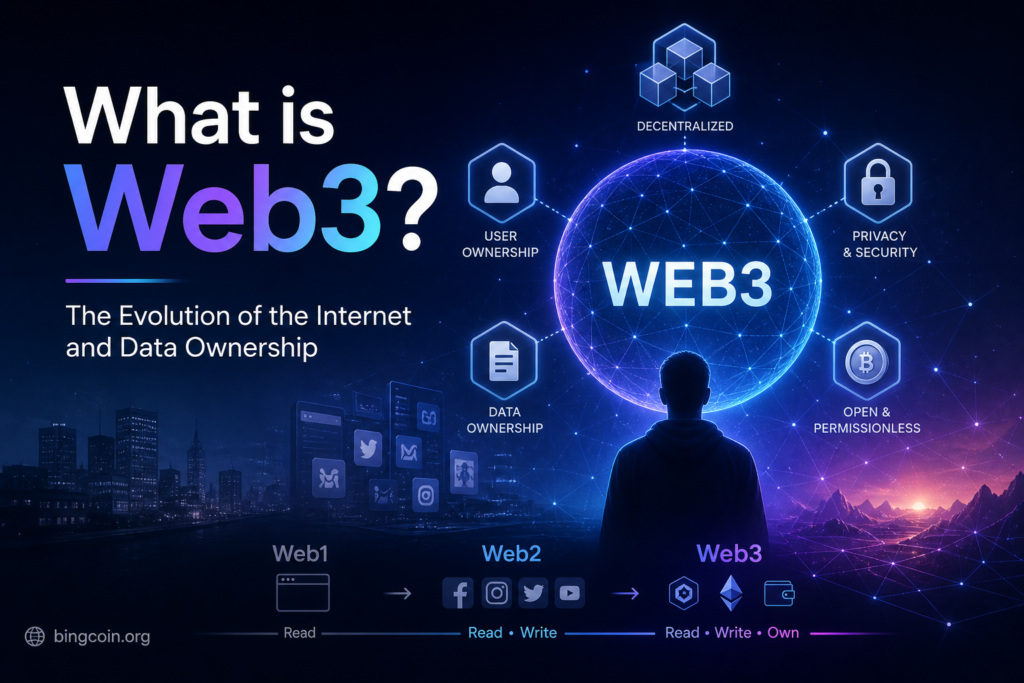
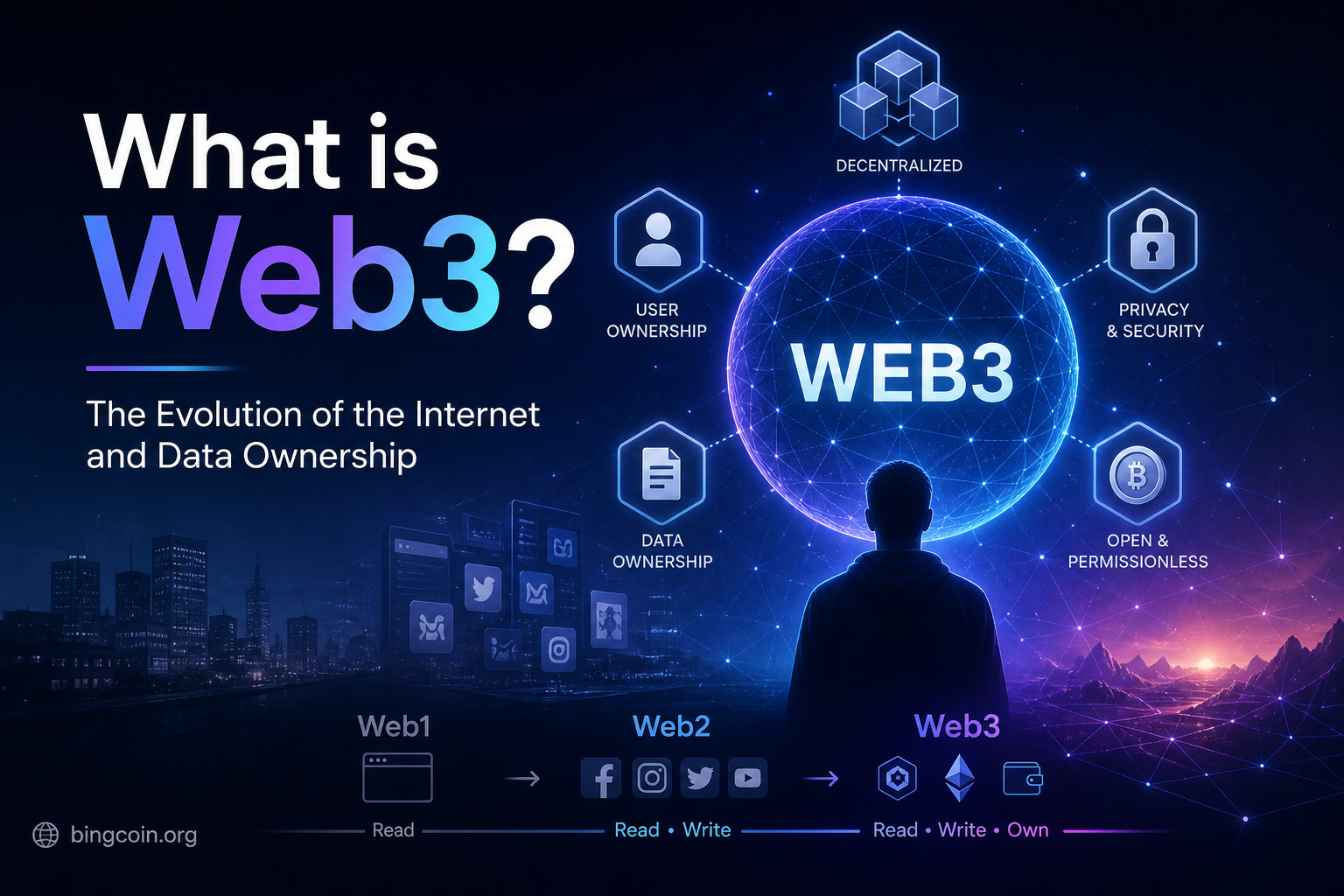
The internet is constantly evolving, and we’re currently standing at the brink of a new era known as Web3. This latest phase in the internet’s evolution promises to transform how we interact with data, emphasizing ownership and decentralization. Understanding Web3 is crucial as it proposes a future where the internet is driven by blockchain technology, empowering users by giving them control over their data.
The Evolution from Web1 to Web3
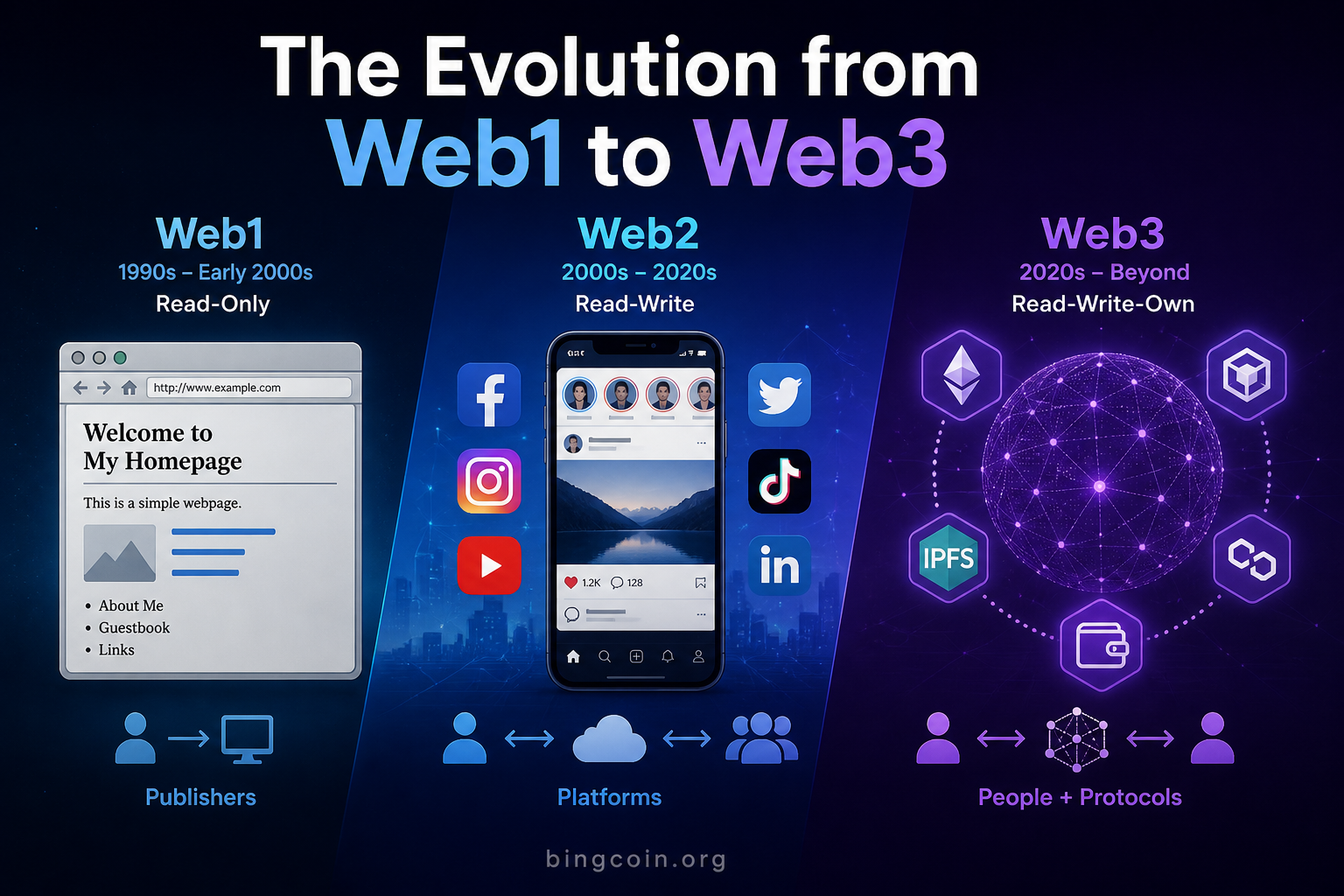
The internet’s evolution can be traced through significant phases, beginning with Web1, advancing to Web2, and now transitioning to Web3. Each phase brought fundamental changes in how users interacted with the internet and perceived digital content.
Web1: The Static Web
The original incarnation of the internet, Web1, is often referred to as the “static web.” Introduced in the early 1990s, it primarily consisted of read-only web pages. Users could browse content but had minimal interaction beyond that. Websites were basic and served as digital brochures with information directed at an audience of passive consumers.
Web2: The Social Web
Web2 marked the transformation into a more interactive version of the internet, characterized by user-generated content and social interactions. This phase, which began in the mid-2000s, brought social media platforms, blogs, and wikis that allow users to create, share, and connect. While engagement increased, so did concerns around data ownership and privacy, as tech giants increasingly controlled personal data.
Web3: The Decentralized Web
Web3 represents the next evolutionary step, promising a decentralized internet experience. Built largely on blockchain technology, Web3 empowers users to own and control their data, aiming to eliminate central authorities. This phase posits a future where data privacy is paramount, and intermediaries are minimized.
Core Principles of Web3
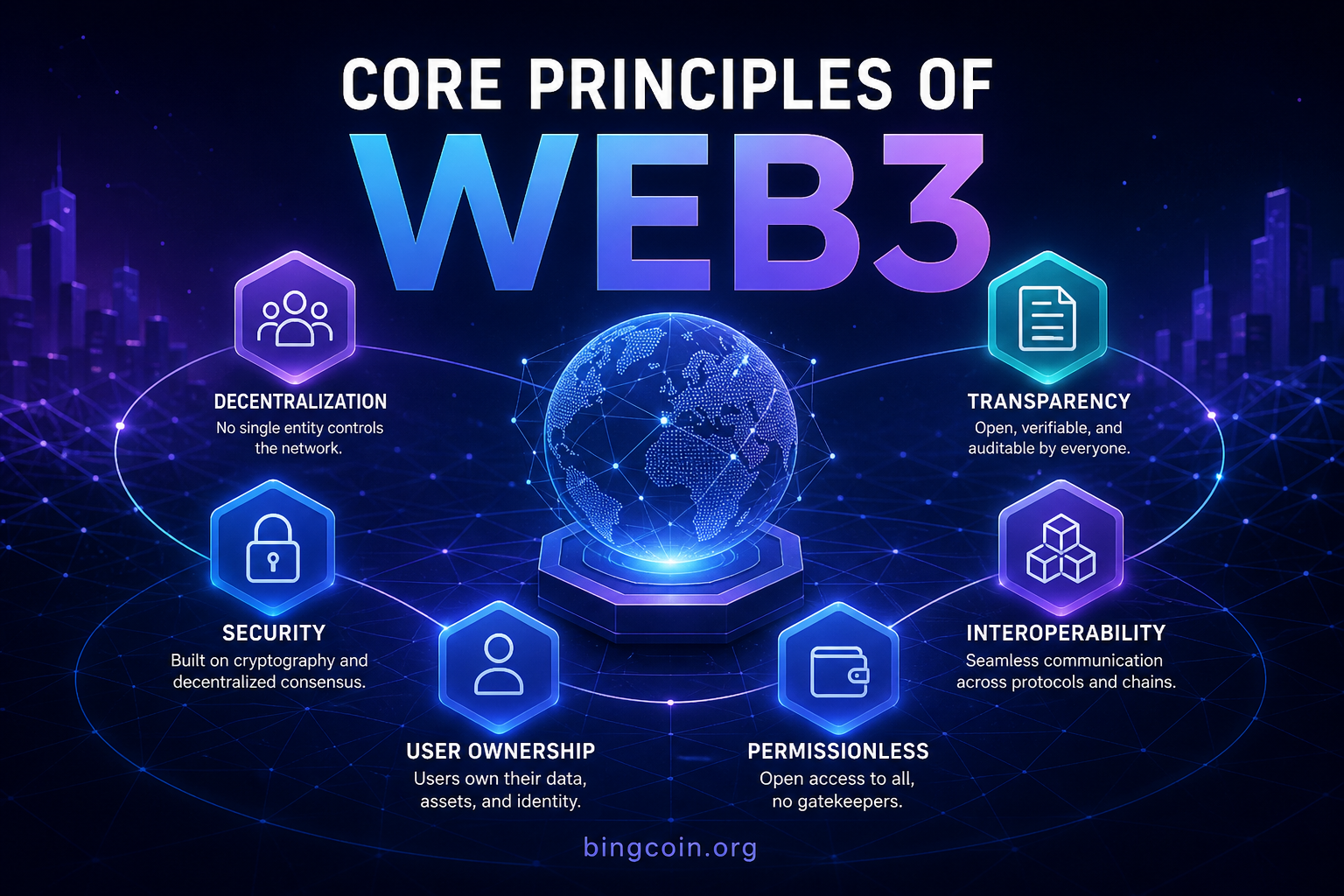
Web3 is driven by several core principles that set it apart from previous web iterations:
- Decentralization: Instead of centralized servers, Web3 operates on blockchain networks where data is distributed across peer-to-peer nodes.
- User Ownership: Web3 provides mechanisms for individuals to own their digital identities and data, while empowering users with more control over the internet.
- Smart Contracts: Utilizing blockchain technology, smart contracts are self-executing agreements coded directly onto blockchains, capable of automating complex digital interactions.
- Token-based Economics: Web3 incorporates cryptocurrency and tokens as key elements of digital transactions, facilitating peer-to-peer exchanges without intermediaries.
The Role of Blockchain in Web3
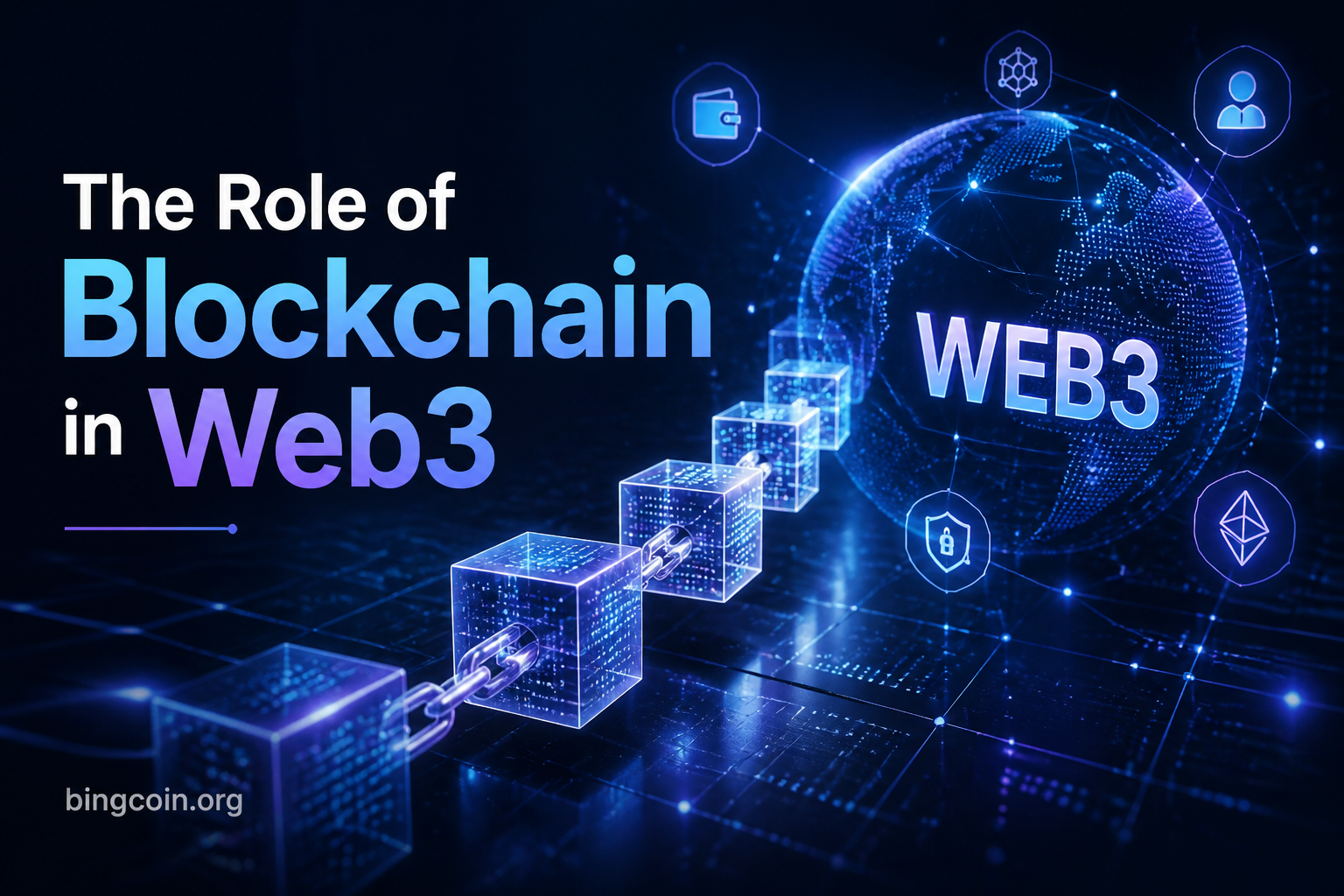
Blockchain technology is at the heart of Web3, enabling its revolutionary shifts in data handling and autonomous functionality.
- Distributed Ledger: At the core of blockchain technology, this ledger records all transactions across multiple nodes, ensuring transparency and resistance to tampering.
- Security and Privacy: Blockchain’s cryptographic features enhance security, as user data is secured in a manner where only parties with the proper credentials can access it.
- Interoperability: Web3 aims to build on blockchain’s ability to seamlessly interact with various systems, supporting a harmonized experience where different platforms communicate effortlessly.
Practical Applications of Web3
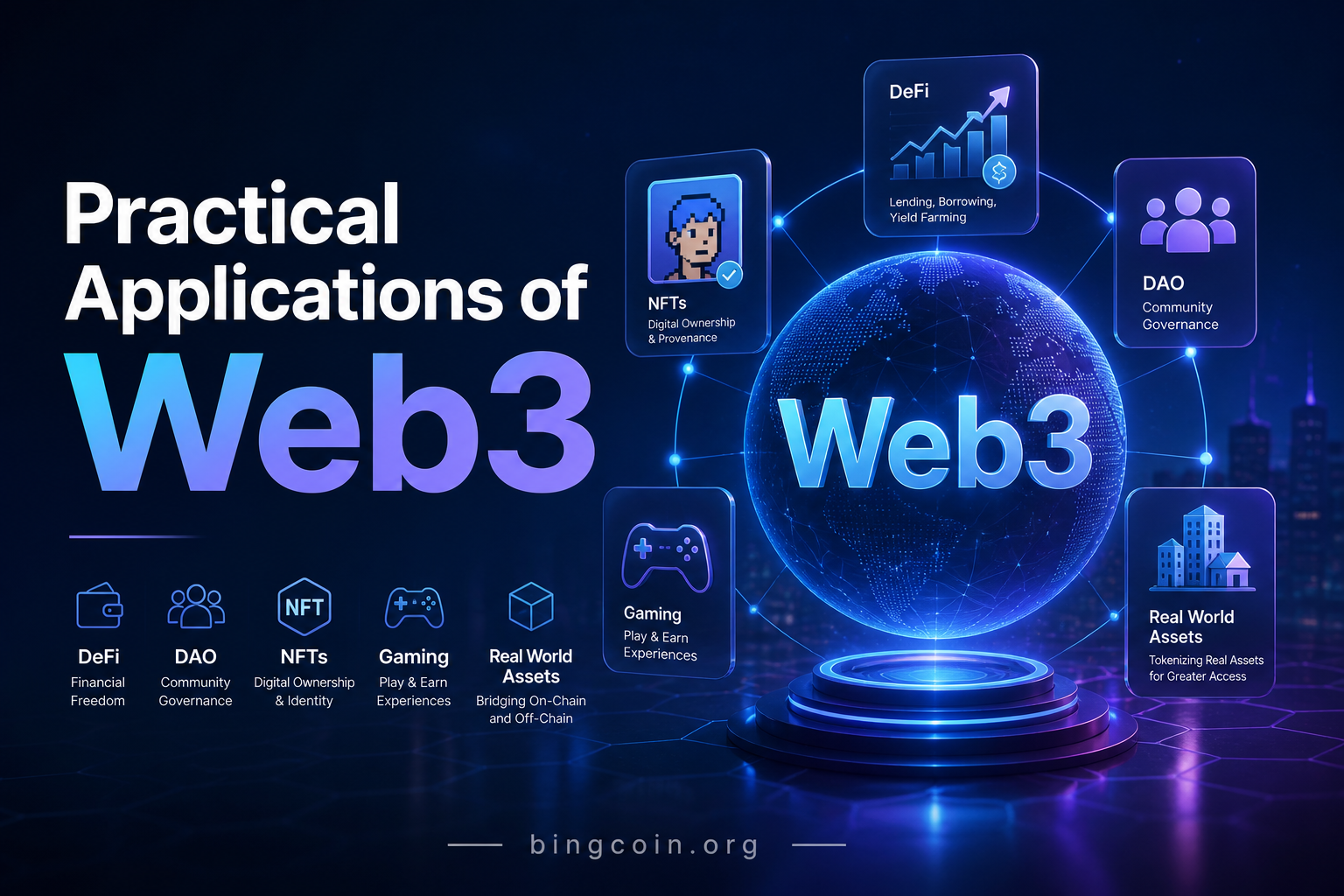
Web3’s approach finds applicability across various fields, revolutionizing traditional systems:
Decentralized Finance (DeFi)
Web3 facilitates decentralized financial systems, leading to the rise of DeFi, where users can lend, borrow, and trade cryptocurrencies without relying on traditional banks. This system promotes financial inclusivity and reduces barriers to access.
Decentralized Autonomous Organizations (DAOs)
DAOs leverage Web3’s principles to allow organizations to function without centralized control. Members distinctly participate in decision-making processes through blockchain-validated governance systems.
Digital Identity Management
Web3 empowers users with digital identities controlled by them, reducing reliance on centralized identity providers. Users can maintain ownership and control over their personal information.
Challenges and Limitations of Web3
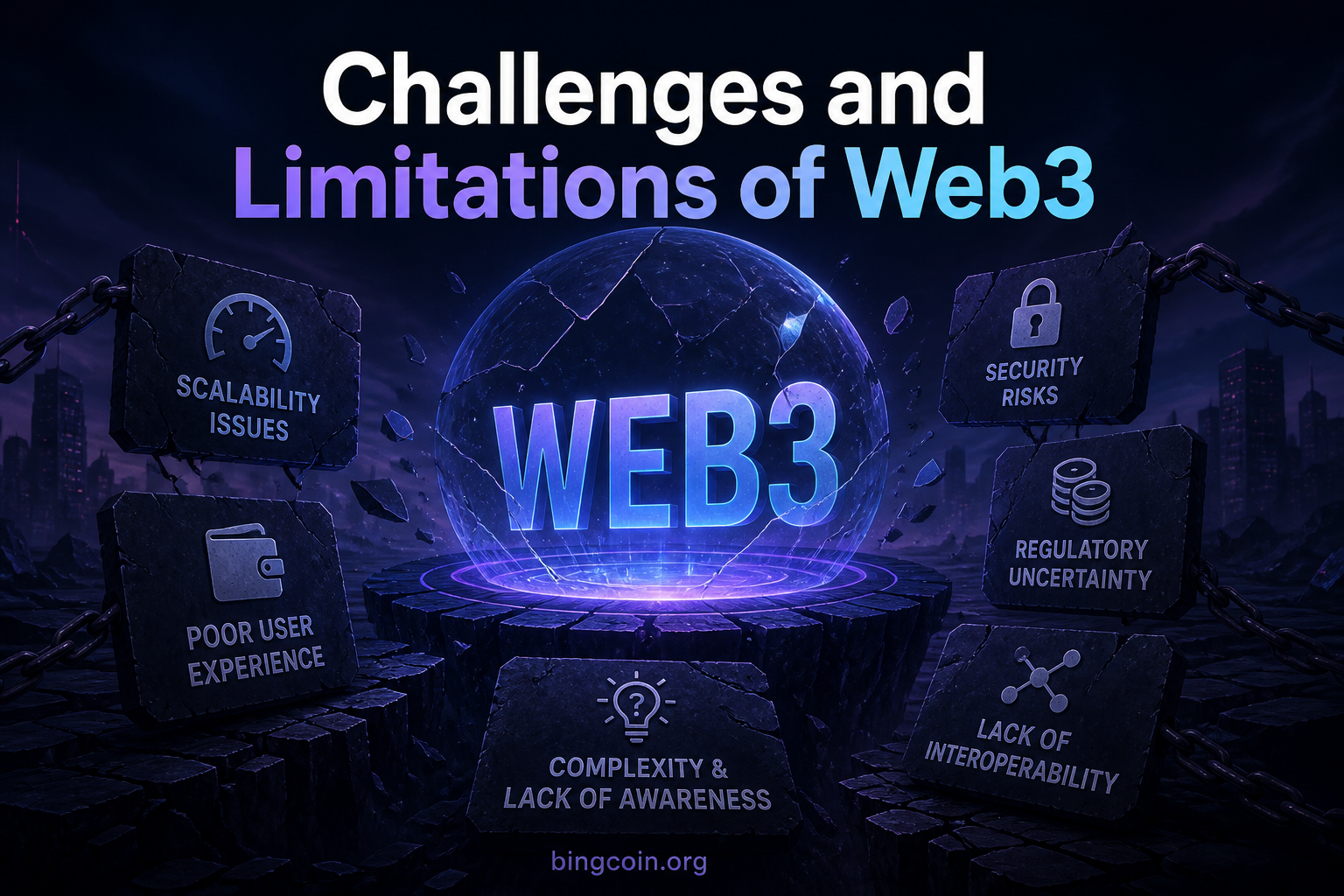
While Web3 presents many promising advancements, it also faces its set of challenges that hinder its pervasive adoption:
- Scalability: As blockchain networks grow, scaling remains a concern, potentially slowing down transaction times and increasing costs.
- User Experience: For mainstream adoption, Web3 must ensure that user interfaces and experiences are seamless and intuitive, similar to conventional web platforms.
- Regulatory Concerns: Web3’s decentralized nature complicates regulatory frameworks, which are accustomed to centralized systems, posing legal and compliance challenges.
- Security Risks: Despite its secure framework, Web3 remains vulnerable to cyber-attacks and exploits that target blockchain networks and smart contracts.
Web3 stands as a transformative point in the evolution of the internet, offering an empowered, user-centric experience that redefines digital interaction norms. The transition to Web3 is vital as it promises decentralization, enhanced security, and true data ownership. However, like any novel technology, Web3 must navigate certain limitations and challenges to achieve widespread adoption. As it evolves, the potential for Web3 to create a more equitable digital landscape becomes ever more real, urging organizations and individuals to prepare for its transformative impact.
Author: Mr. Huynh & Bingcoin Editorial Team