By Mr. Huynh – Published:2026-08-21T05:24:11.879Z
[Disclaimer: All content on bingcoin.org is strictly for educational and informational purposes only and should not be construed as financial, legal, or investment advice. Cryptocurrency trading involves high risk. Always Do Your Own Research (DYOR).]
Disclaimer: All content on bingcoin.org is for educational and informational purposes only and should not be construed as financial advice. Always Do Your Own Research (DYOR).
Decentralized Finance, or DeFi, represents a revolutionary shift in the way financial services are conducted. By leveraging blockchain technology, DeFi offers an array of financial services typically handled by banks and financial institutions, without central authority. This article delves into the key concepts of DeFi, exploring how it functions and the real-world applications that illustrate its impact.
Understanding DeFi: The Basics
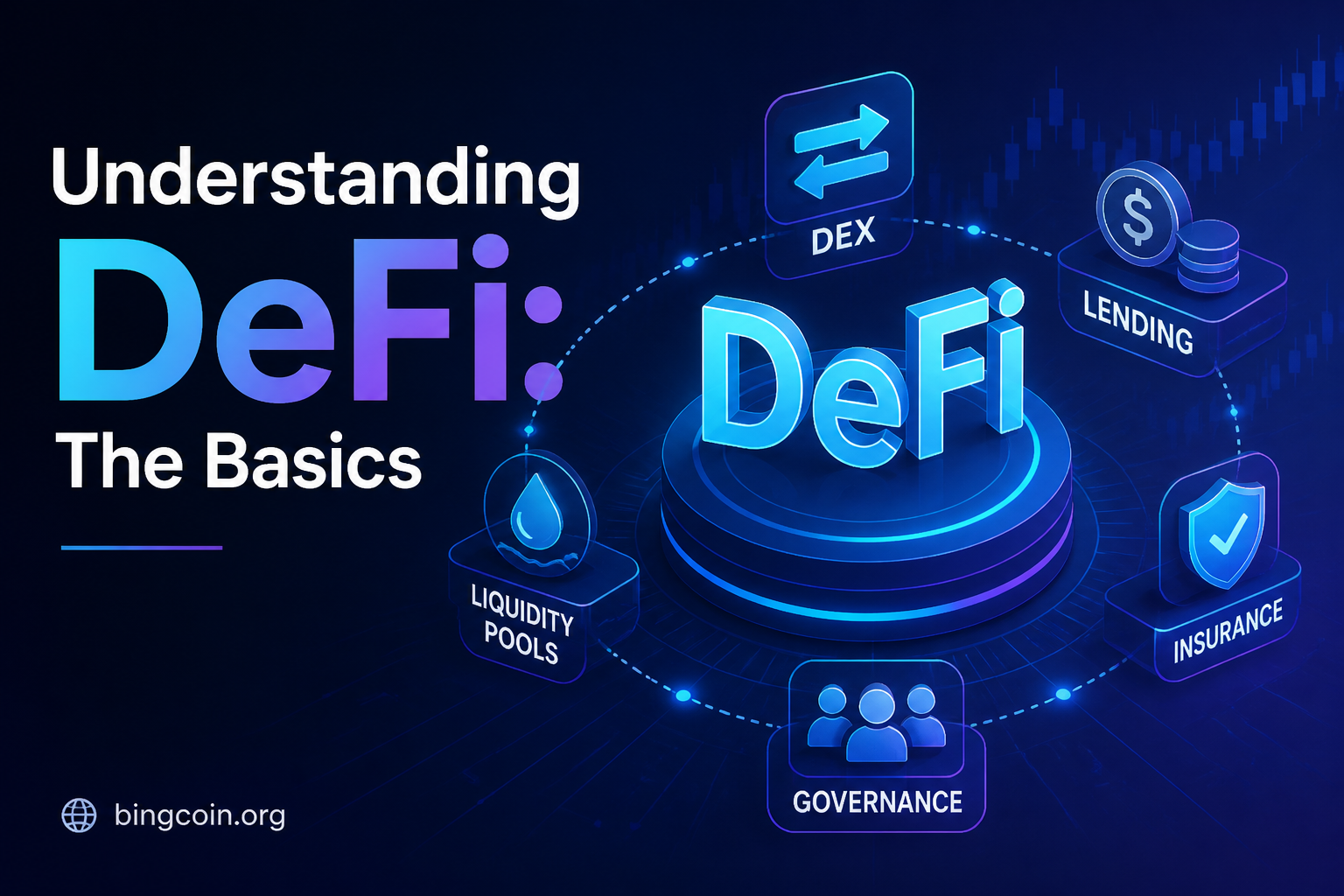
Decentralized Finance, commonly referred to as DeFi, decentralizes financial services using blockchain technology. Unlike traditional financial systems that rely on centralized banks and financial institutions, DeFi operates on smart contracts and peer-to-peer networks.
### Key Characteristics of DeFi
– **Decentralization**: Uses blockchain to distribute control.
– **Transparency**: All transactions are recorded on a public ledger.
– **Accessibility**: Financial services are available to anyone with an internet connection.
– **Permissionless**: No need for approval from a central authority.
– **Interoperability**: Different DeFi services can interact with each other seamlessly.
How DeFi Works
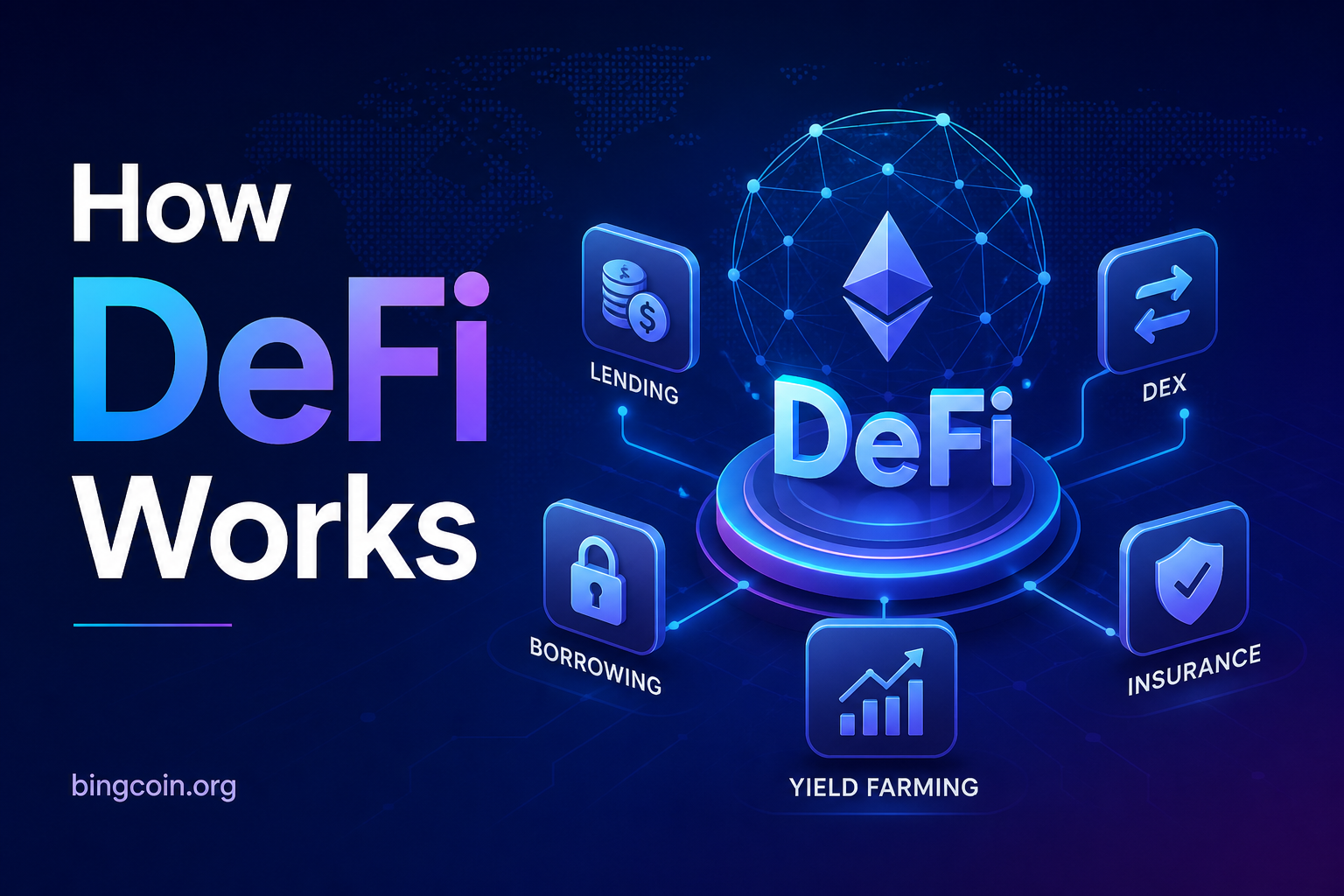
DeFi platforms use smart contracts, which are self-executing programs on the blockchain, to automate transactions and enforce the terms of agreements without intermediaries. By eliminating intermediaries, DeFi reduces costs and increases the speed and efficiency of financial transactions.
### Core Components of DeFi
– **Smart Contracts**: Automated contracts on platforms like Ethereum.
– **Decentralized Applications (dApps)**: Applications that run on a blockchain.
– **Cryptocurrencies**: Serve as both asset and means of transaction in DeFi ecosystems.
– **Stablecoins**: Cryptocurrencies tied to stable assets, reducing volatility.
Popular DeFi Use Cases
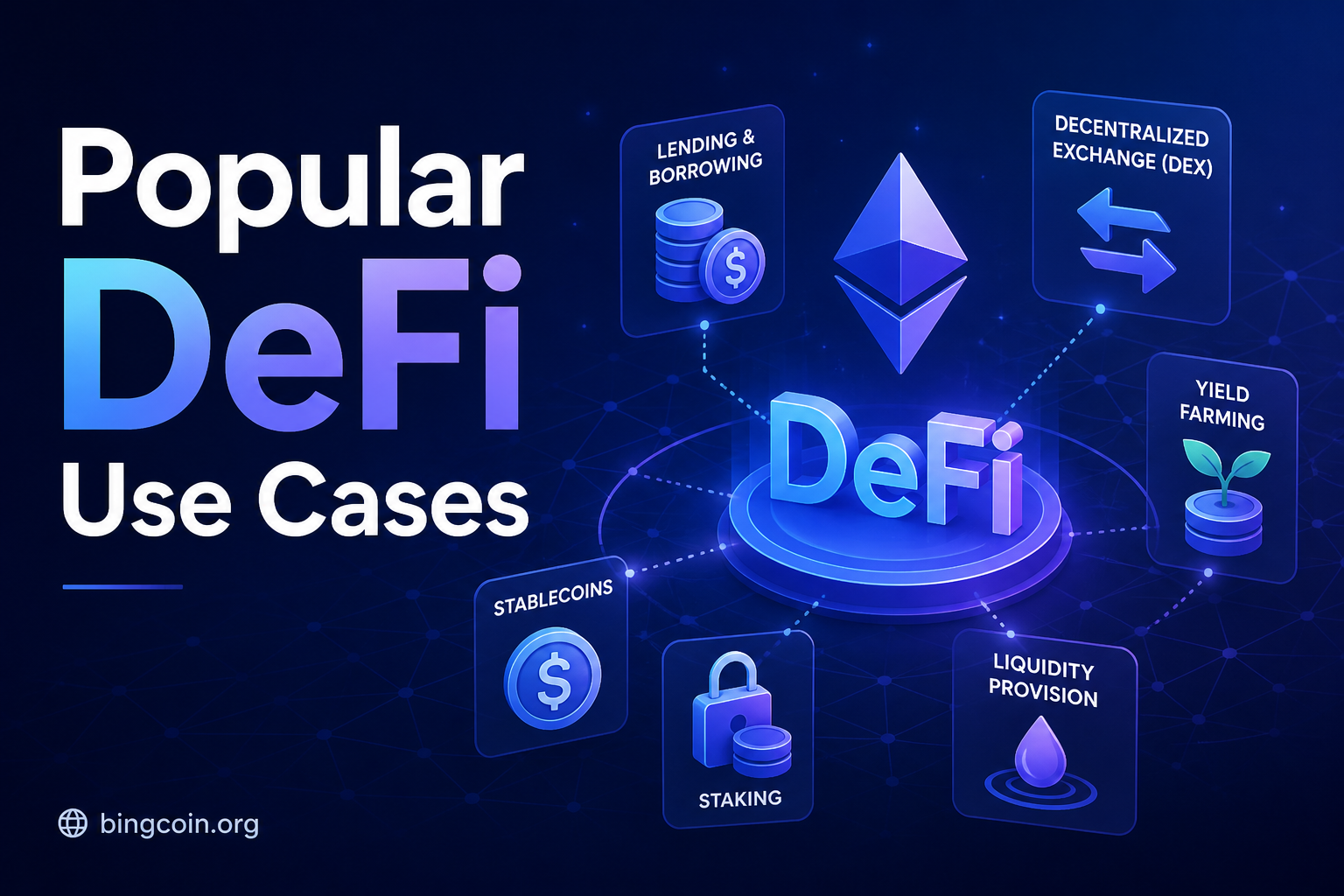
DeFi is transforming traditional finance by introducing several innovative use cases:
– **Lending and Borrowing**: Platforms like Aave and Compound allow users to lend their assets to earn interest or borrow assets by collateralizing other cryptocurrencies.
– **Decentralized Exchanges (DEXs)**: Such as Uniswap and SushiSwap, these platforms facilitate trading without intermediaries by using liquidity pools.
– **Yield Farming**: Users provide liquidity to DeFi platforms and earn rewards, often in the form of native tokens.
– **Asset Management**: DeFi portfolios can be managed using platforms like Yearn Finance, which automate investment strategies.
Benefits and Risks of DeFi
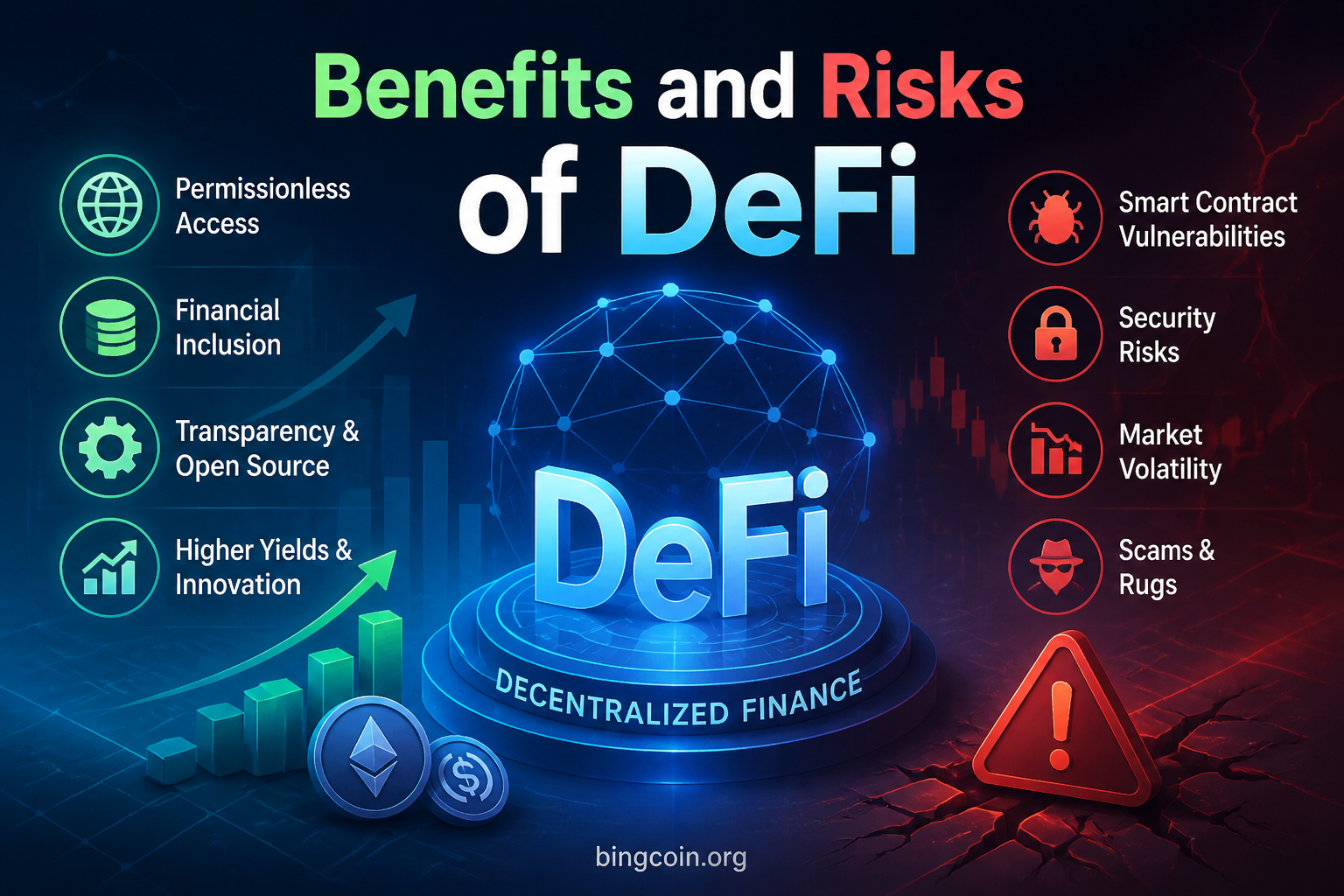
DeFi offers numerous benefits over traditional finance, but it also introduces unique risks.
### Benefits
– **Financial Inclusion**: Anyone with internet access can participate.
– **Innovation**: Rapid development and deployment of financial services.
– **Cost Efficiency**: Lower fees due to the elimination of intermediaries.
### Risks
– **Smart Contract Vulnerabilities**: Bugs and errors in code can be exploited.
– **Regulatory Uncertainty**: Lack of clear regulatory frameworks can pose challenges.
– **Market Volatility**: Cryptocurrencies are highly volatile, affecting DeFi stability.
The Future of DeFi
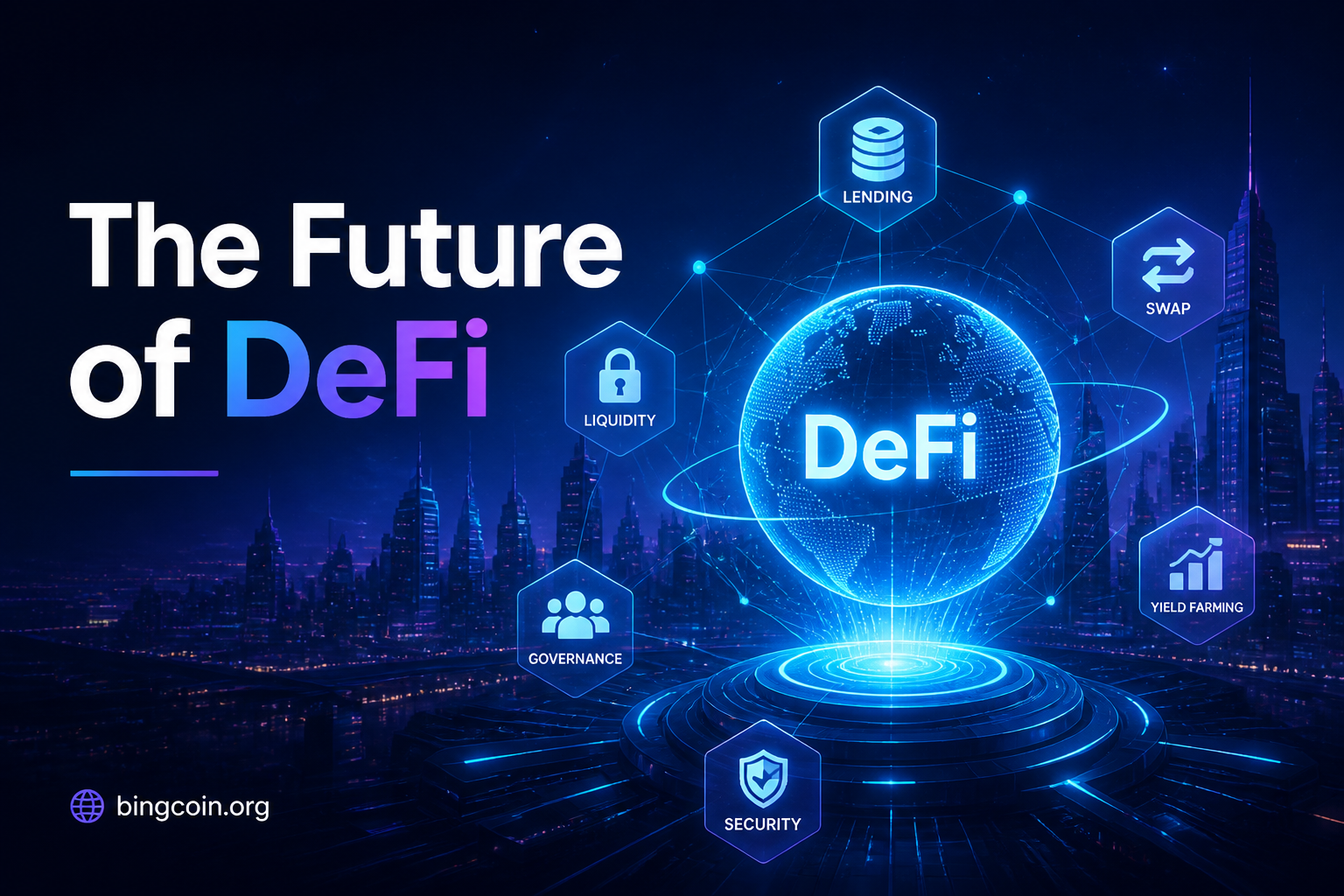
DeFi is poised for continued growth and evolution. Key factors that will influence its future include regulatory developments, technological advancements, and market adoption.
Potential Developments
Regulation: Greater clarity could stabilize and legitimize DeFi environments.
Scalability: Solutions like Ethereum 2.0 aim to handle higher transaction volumes.
Interoperability: Improved connection between different blockchain networks.
The maturation of DeFi technology and infrastructure will play a critical role in its widespread adoption and integration into the global financial system.
Decentralized Finance represents a fundamental shift in how financial transactions are executed by leveraging blockchain technology for transparency, security, and efficiency. With its potential to democratize financial services globally, DeFi is transforming traditional financial landscapes. However, it also presents challenges including technical vulnerabilities and regulatory uncertainty. As DeFi continues to evolve, it promises to influence the future of finance significantly.
Author: Mr. Huynh & Bingcoin Editorial Team




[…] Value Locked (TVL) is a vital metric in the DeFi landscape, representing the total capital locked within a protocol’s smart contracts. It serves […]