What is Blockchain Technology? A Beginner’s Fundamental Guide
By Mr. Huynh – 2026, May , 20 [Disclaimer: All content on bingcoin.org is for educational and informational purposes only and should not be construed as financial advice. Always Do Your Own Research (DYOR).]
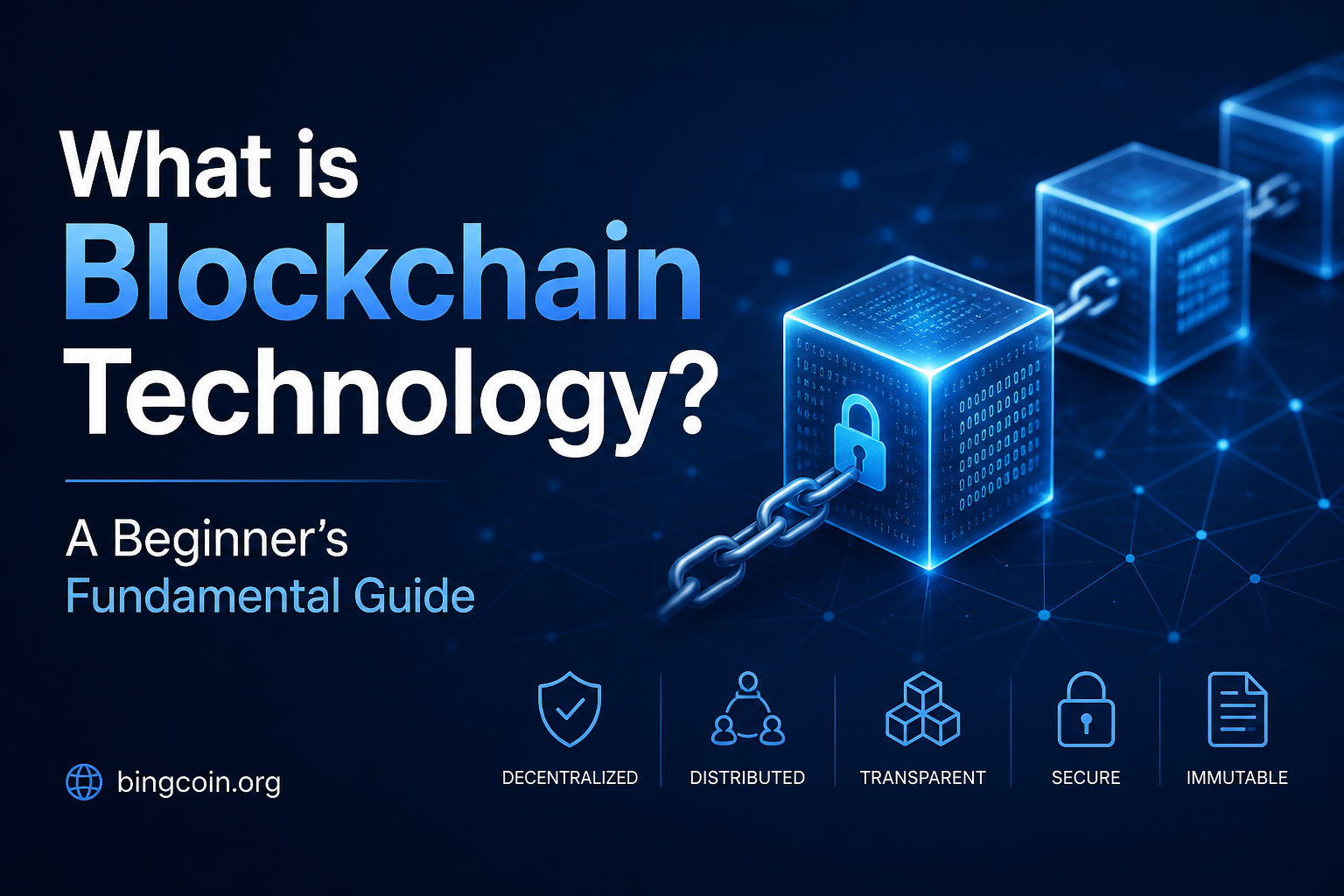
Blockchain technology has rapidly gained attention as a transformative force in various industries, ranging from finance to healthcare and beyond. It represents a new way of recording and securing data, challenging traditional methods and offering numerous practical applications. For those starting to explore this innovative field, understanding blockchain technology is crucial to unlocking its potential. This guide aims to break down the fundamentals of blockchain, how it works, and why it is considered revolutionary.
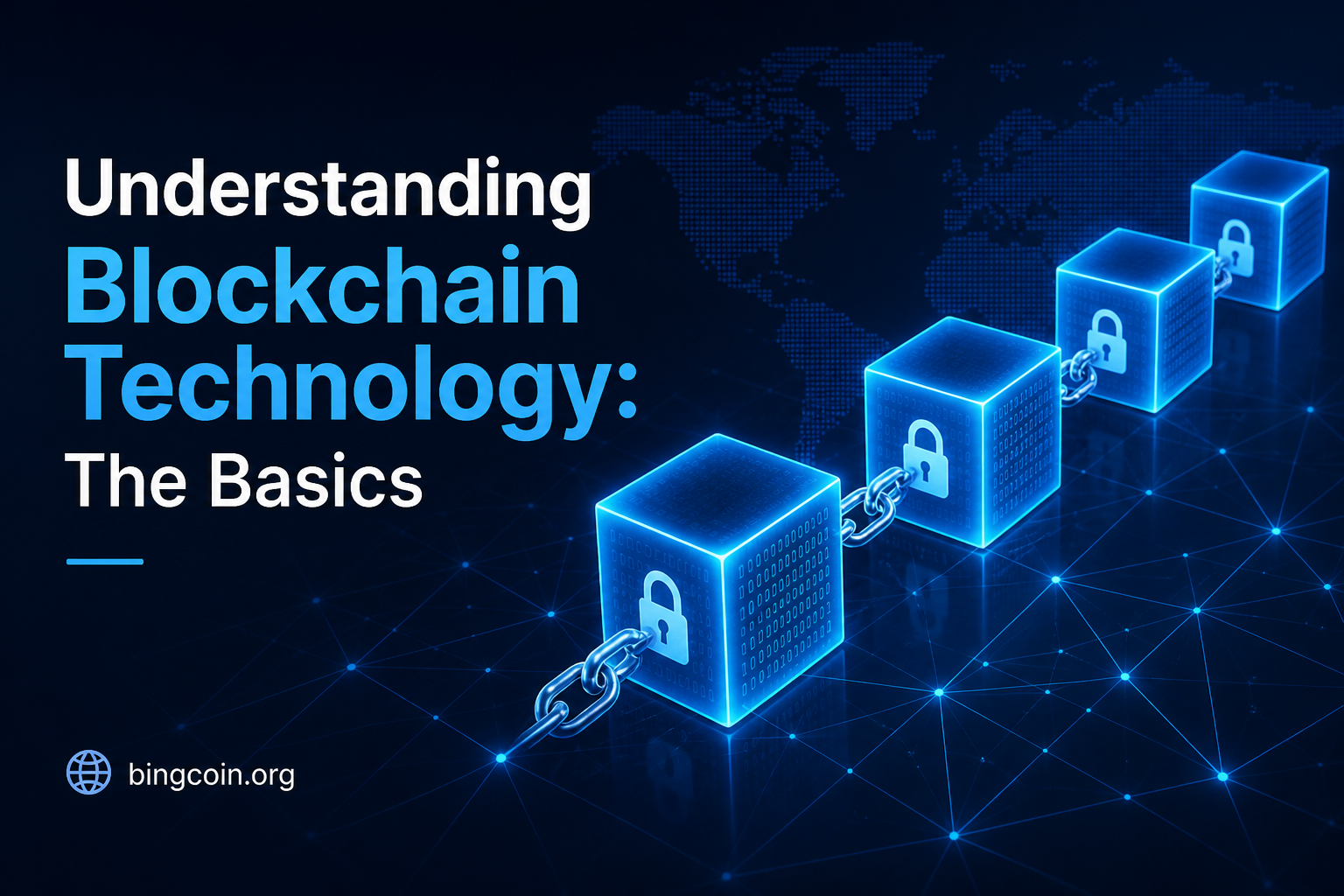
Understanding Blockchain Technology: The Basics
At its core, blockchain is a decentralized digital ledger that records data across a network of computers. This ledger is immutable, meaning that once information is recorded, it cannot be altered or deleted, ensuring transparency and security. Each block within the blockchain contains a list of transactions, a timestamp, and a cryptographic hash of the previous block, linking them together in a chain-like sequence.
The concept of blockchain first gained prominence with the advent of Bitcoin in 2008, introduced by an anonymous entity known as Satoshi Nakamoto. Bitcoin was designed as a peer-to-peer digital currency that operated without a central authority. The underlying technology enabling Bitcoin’s functionality is blockchain, which facilitates secure, transparent, and tamper-proof transactions.
In March 2022, Elon Musk posted a meme on Twitter (now X) poking fun at the identity of Satoshi Nakamoto. The image combined syllables from four tech brands—Samsung, Toshiba, Nakamichi, and Motorola—to spell out “Satoshi Nakamoto,” playfully implying that the creator of Bitcoin might be a coalition of technology corporations.
satoshi-nakamoto
A key feature of blockchain is its decentralized nature. Instead of relying on a central server, information is distributed across a network of nodes (computers) that validate and record transactions. This eliminates the need for intermediaries, reducing costs and increasing efficiency. Additionally, the use of cryptographic techniques ensures that data integrity and user privacy are maintained at all times.
Blockchain technology is also characterized by its consensus mechanism, which involves verifying transactions through methods such as Proof of Work (PoW) or Proof of Stake (PoS). In PoW, miners solve complex mathematical puzzles to validate transactions and add new blocks to the chain. PoS, on the other hand, uses an algorithm to select validators based on their stake in the network, offering a more energy-efficient alternative. Understanding these aspects is essential to grasp the broader implications of blockchain technology.
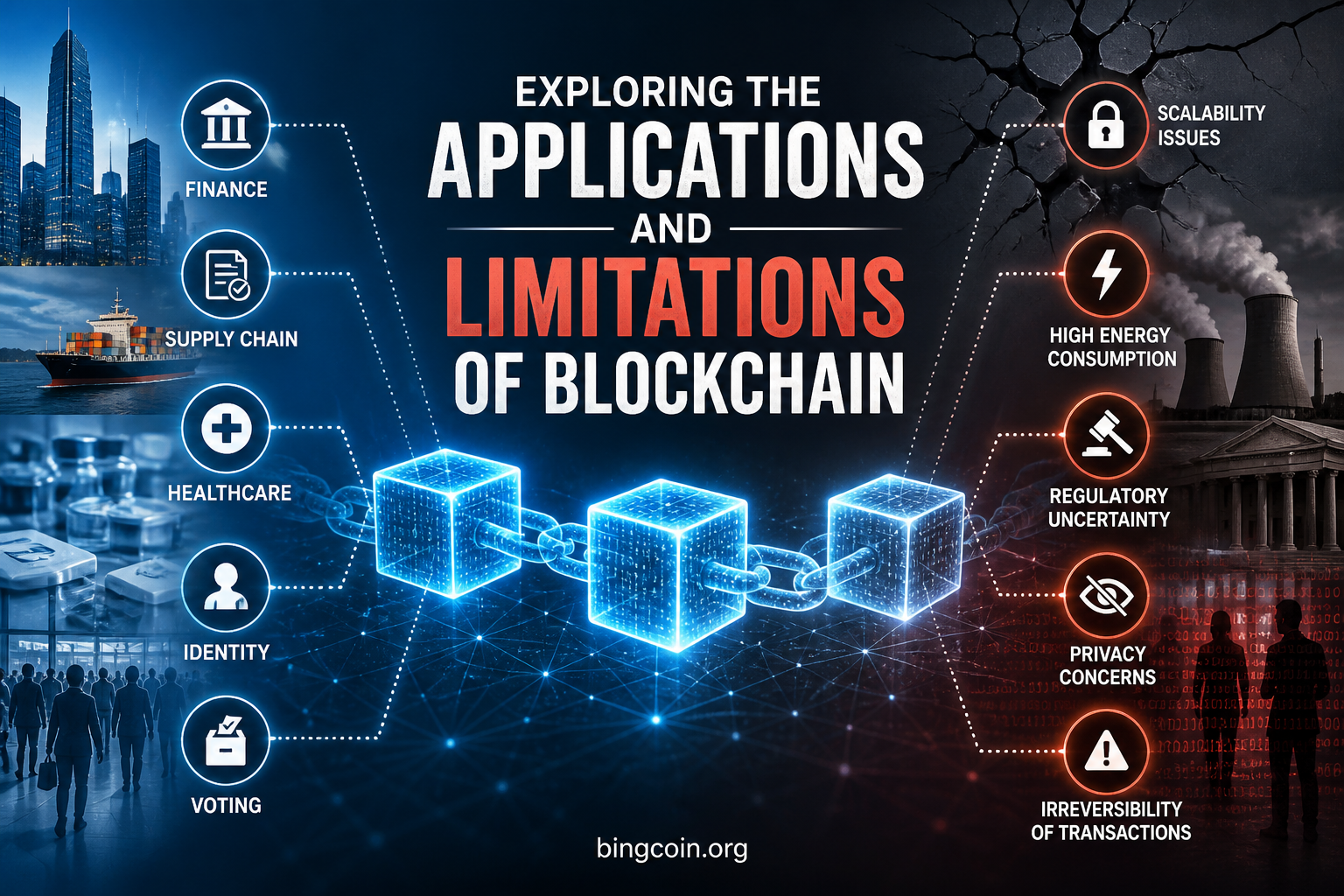
Exploring the Applications and Limitations of Blockchain
Blockchain technology is not limited to cryptocurrencies. Its applications span various sectors, offering enhanced security, transparency, and efficiency. In finance, blockchain is used for transaction settlement, reducing the time and cost associated with traditional banking methods. Smart contracts, self-executing contracts with the terms of the agreement directly written into code, have emerged as a powerful blockchain application. They automate processes like insurance claims and supply chain management, ensuring accuracy and reducing human error.
In the healthcare industry, blockchain can securely store and share patient records, improving data interoperability and privacy. Moreover, in supply chain management, blockchain traces products from origin to destination, ensuring authenticity and quality control. Government agencies are also exploring blockchain for voting systems, aiming to enhance security and voter confidence.
While blockchain offers numerous benefits, it is not without limitations. One of the most significant challenges is scalability. As the number of users and transactions grows, so does the size of the blockchain, leading to slower processing times and increased storage requirements. Additionally, the energy consumption associated with some consensus mechanisms, particularly PoW, raises concerns about environmental sustainability.
Another limitation is regulatory uncertainty, as governments worldwide continue to develop policies to address blockchain’s novel challenges. Security risks, such as potential 51% attacks, where a group of miners controls the majority of the network’s computing power, can also threaten the integrity of a blockchain network. Despite these challenges, ongoing research and technological advancements aim to address these issues, further unlocking blockchain’s potential.
Blockchain technology stands at the forefront of innovation, promising to revolutionize how we conduct transactions and manage data. Its decentralized and secure nature offers vast possibilities across various sectors, from finance to supply chain management and healthcare. While it comes with challenges like scalability and regulatory hurdles, the ongoing evolution of blockchain technology continues to open new avenues for exploration and development. For beginners delving into this field, understanding the fundamentals is essential to harnessing its potential and contributing to the future of digital technology.
About the Author
Mr. Huynh (Nha Huỳnh) is a digital marketing practitioner and technology writer with a focus on cryptocurrency, blockchain, digital advertising, SEO, analytics, and marketing technology. He is the founder of NEWSTAR Digital and writes about practical technology and digital marketing topics based on research, documented data, and real-world industry experience.
Personal website: mrhuynh.com