By Mr. Huynh – Published:2026-08-21T06:35:43.233Z
[Disclaimer: All content on bingcoin.org is strictly for educational and informational purposes only and should not be construed as financial, legal, or investment advice. Cryptocurrency trading involves high risk. Always Do Your Own Research (DYOR).]
Disclaimer: All content on bingcoin.org is for educational and informational purposes only and should not be construed as financial advice. Always Do Your Own Research (DYOR).
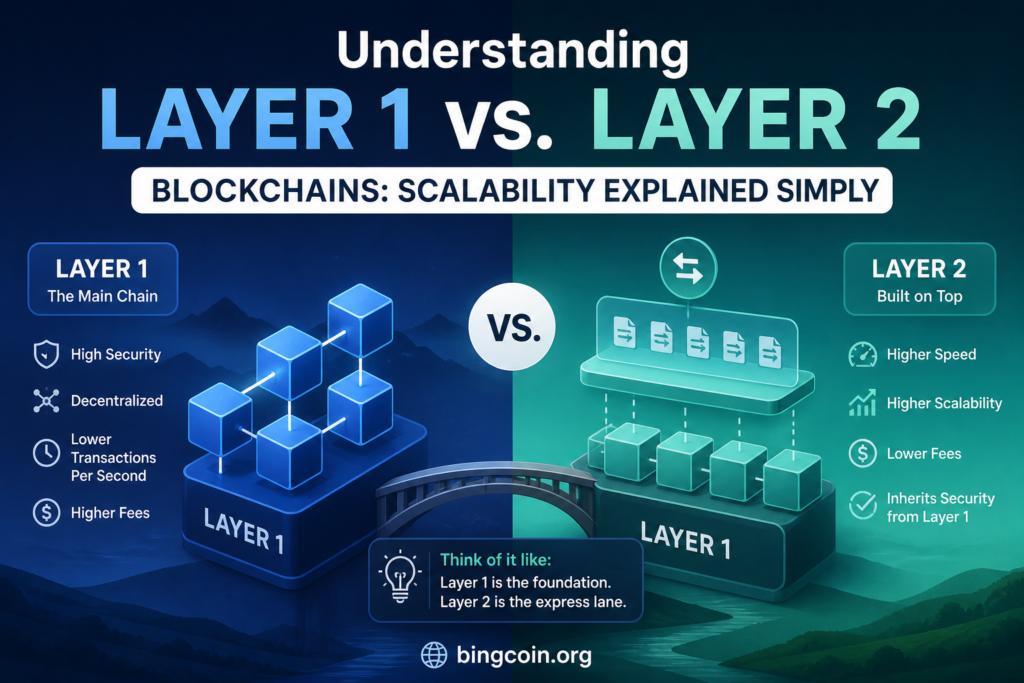
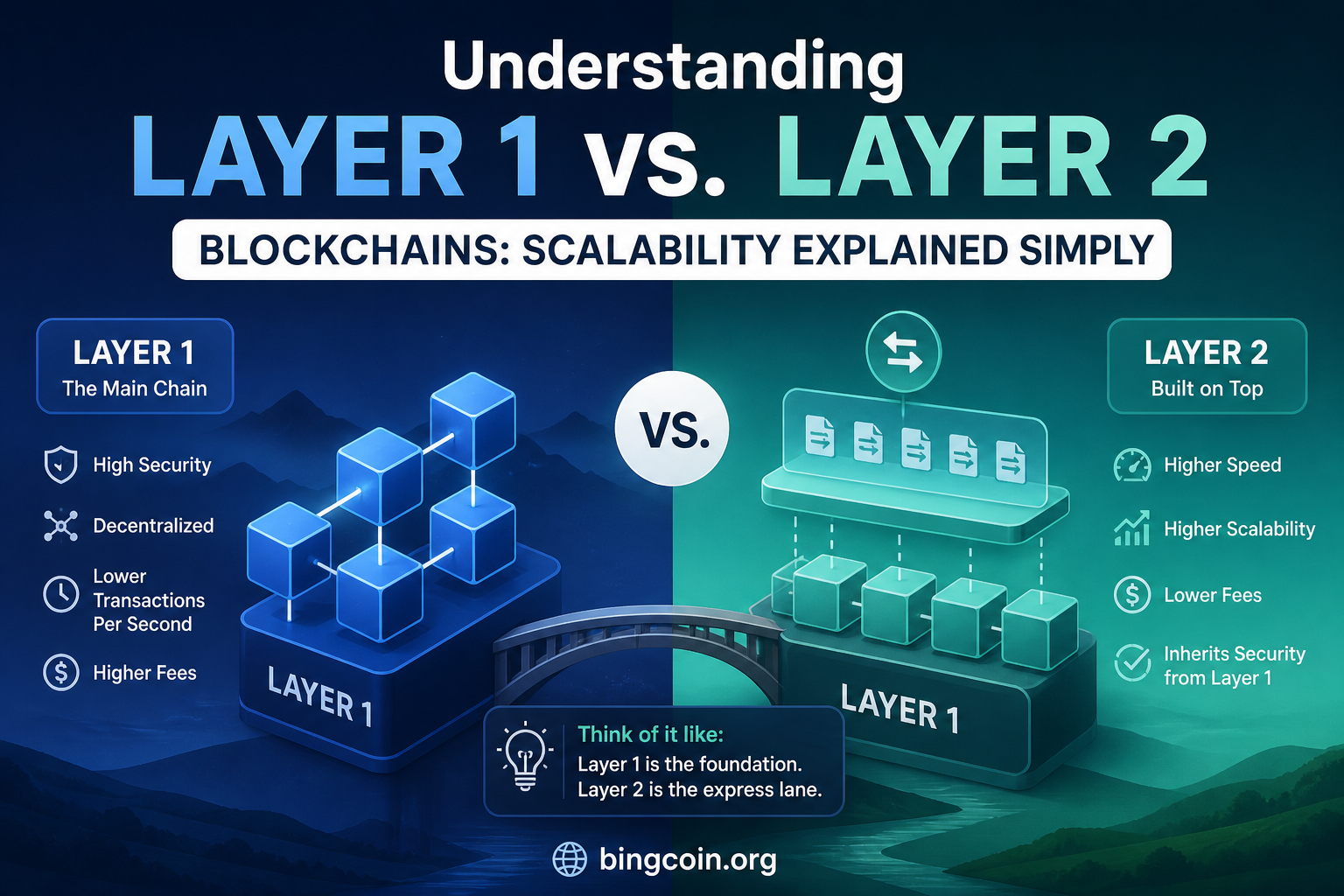
The rapid growth of blockchain technology has brought about a pressing need for scalability, resilience, and efficiency. Understanding the differences between Layer 1 and Layer 2 blockchains is crucial for grasping how scalability can be achieved. This article seeks to demystify these concepts, providing a clear explanation of how each layer contributes to the overall performance and scalability of blockchain systems.
Defining Layer 1 Blockchains
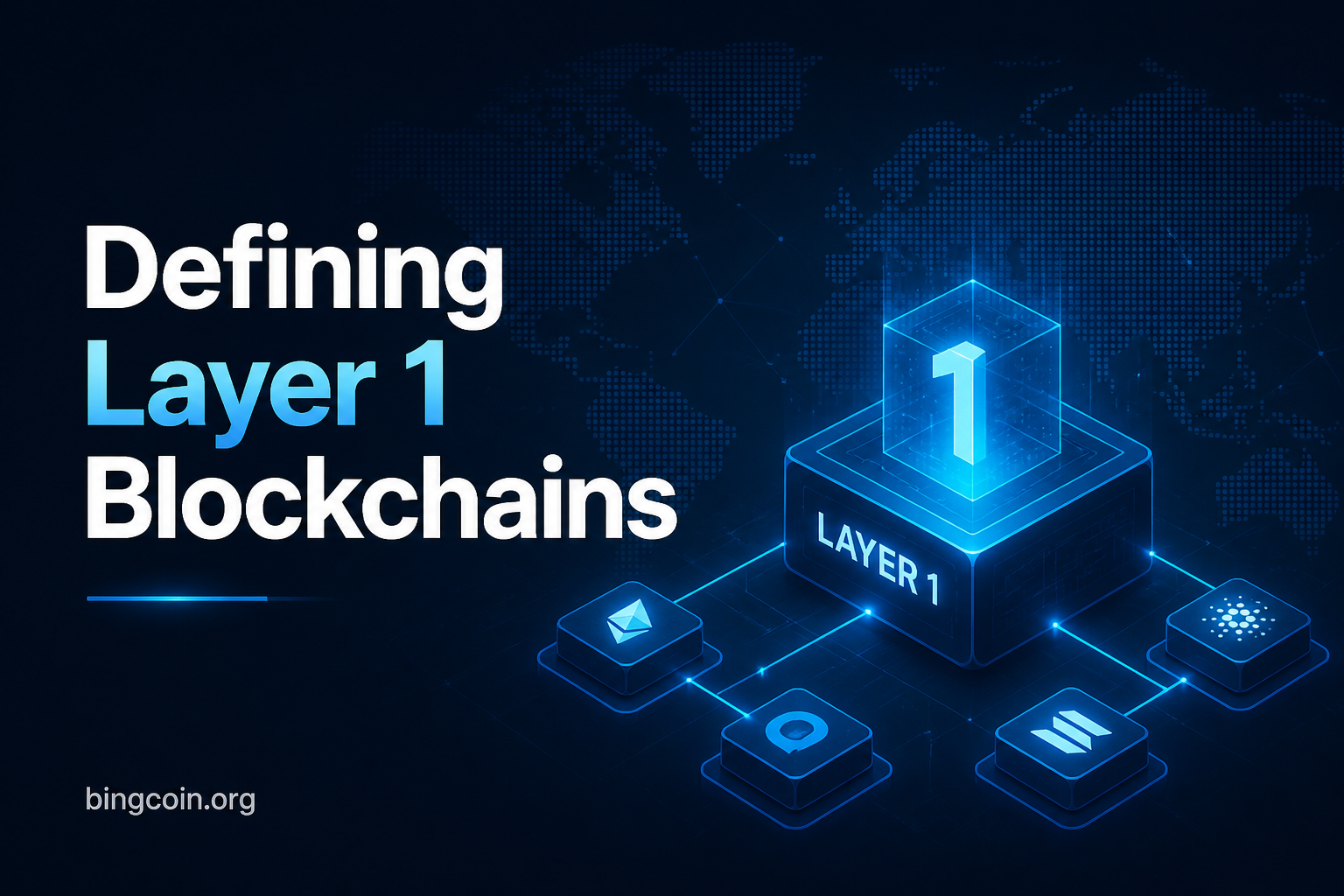
Layer 1 blockchains, often referred to as the base layer, form the foundational architecture of a blockchain network. They encompass the primary protocol and include the network’s rules, fundamental operations, and consensus mechanisms.
Examples of Layer 1 blockchains include Bitcoin and Ethereum, which handle transactions directly on their networks. These blockchains ensure secure and decentralized transactions, serving as the backbone for blockchain operations. However, challenges such as limited transaction throughput and high energy consumption often plague Layer 1 systems, making scalability an ongoing concern.
The Role of Layer 2 Solutions
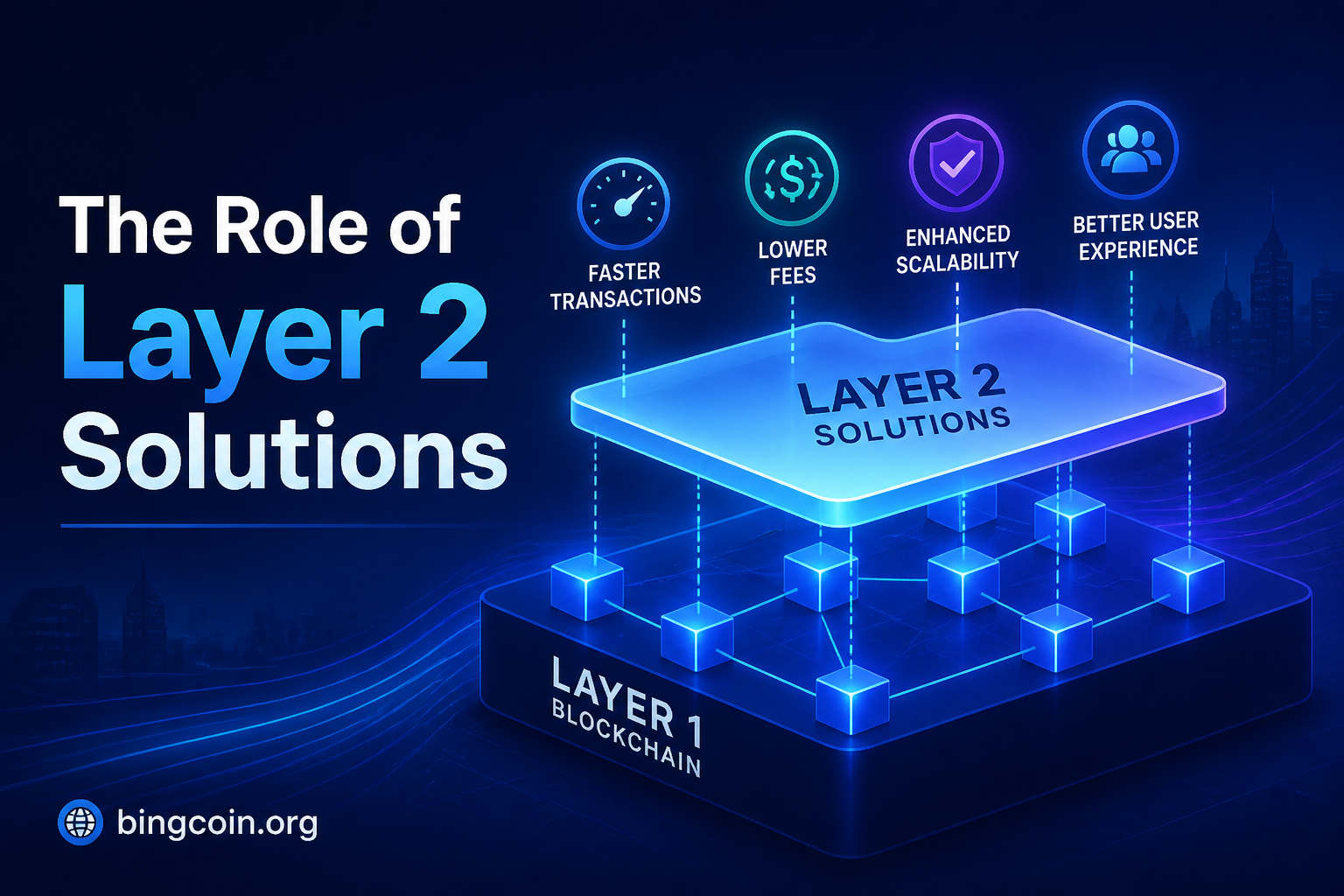
Layer 2 solutions are designed to enhance the scalability of Layer 1 blockchains by offloading some of the transaction processing from the base layer. These solutions are built on top of the original blockchain network, enabling higher transaction speeds and lower costs without compromising security and decentralization.
Layer 2 solutions employ various techniques, including:
- State Channels: Allow transactions to be conducted off-chain, with only the initial and final states recorded on the blockchain, reducing the need for each transaction to be processed by the Layer 1 network.
- Plasma Chains: Utilize child chains that interact with the main chain to process a large number of transactions at a reduced cost and increased speed.
- Rollups: Aggregate multiple transactions into a single batch processed on the main chain, optimizing throughput.
Comparing Layer 1 and Layer 2 Approaches
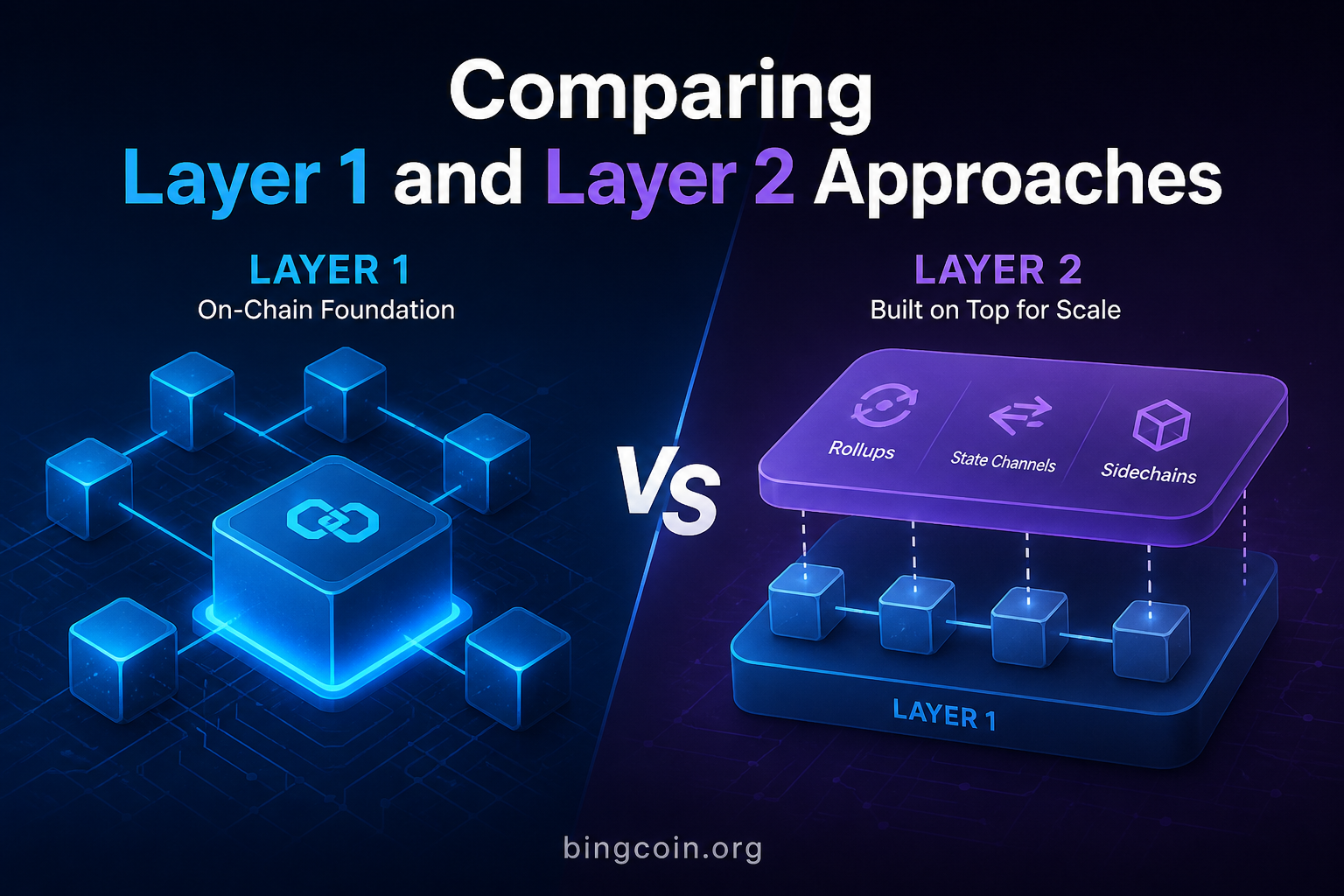
The key differences between Layer 1 and Layer 2 blockchains highlight their unique roles in addressing scalability:
| Feature | Layer 1 | Layer 2 |
|---|---|---|
| Primary Function | Base protocol for the network | Scalability enhancement |
| Transaction Processing | Directly on the blockchain | Off-chain or on auxiliary chains |
| Scalability | Limited due to consensus constraints | Higher potential by offloading processing |
| Security and Decentralization | Inherent in the network | Relies on Layer 1’s security |
Benefits and Challenges
Benefits of Layer 1 Blockchains
Layer 1 blockchains are admired for their robust security, decentralization, and immutability, offering a strong foundation for executing transactions and supporting complex smart contracts.
Benefits of Layer 2 Solutions
By offloading transactions, Layer 2 solutions offer:
- Increased transaction throughput
- Reduced transaction fees
- Enhanced user experience due to faster confirmation times
Challenges and Limitations
Despite their advancements, challenges remain:
- Layer 1’s scalability is inherently limited without additional layers.
- Layer 2 solutions occasionally face security vulnerabilities, as maintaining data consistency between layers can be complex.
- Creating interoperability between different blockchains to fully leverage layer technologies continues to be a developmental hurdle.
Future Prospects and Developments
Ongoing innovation in blockchain technology suggests that combining the strengths of Layer 1 and Layer 2 solutions may pave the way to solving complex scalability challenges. Upgrades like Ethereum’s transition towards Ethereum 2.0 aim to address scalability concerns by implementing significant improvements to the existing Layer 1 framework.
The future holds promising possibilities, with research pointing towards the development of hybrid solutions that blend Layer 1 stability with Layer 2’s scalable efficiency. As such, blockchain communities and developers continue to work on balancing scalability, security, and decentralization to ensure the broader adoption of blockchain technology.
The distinction between Layer 1 and Layer 2 blockchains plays an integral role in the future of blockchain scalability. While Layer 1 blockchains provide the critical infrastructure needed for decentralized networks, Layer 2 solutions address scalability constraints, fostering greater transaction efficiency and cost-effectiveness. Understanding these layers enables stakeholders to innovate and optimize blockchain networks, driving technological progress in a broader application context. As new solutions emerge to address existing challenges, the synergy between Layer 1 and Layer 2 solutions will be pivotal in realizing the full potential of blockchain technologies.
Author: Mr. Huynh & Bingcoin Editorial Team